




Some Reflections on Pride, Language & Identity at a Controversial Time
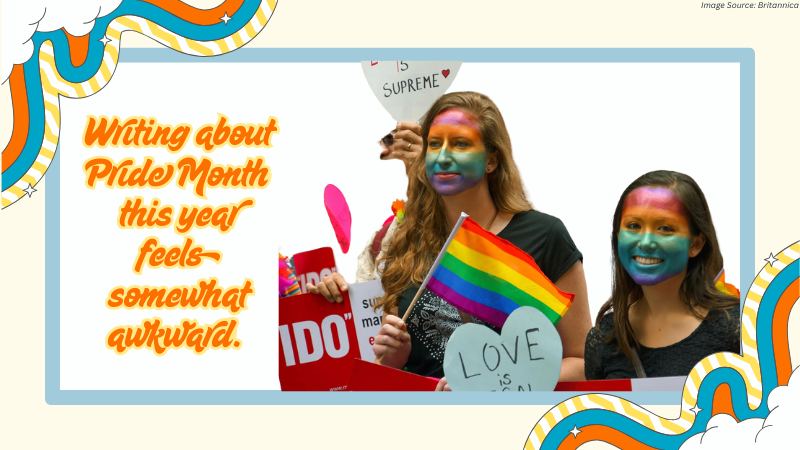
Writing about Pride Month this year feels somewhat awkward. It seems that the relative progress of the 2000s and 2010s is being rolled backwards across the globe. For those of us who live in North America or Europe, it is not hard to spot prejudiced dialogue about gender roles and gender conformity. It’s almost like there is a renewed push to draw thick black lines between different identities. It’s easy to feel as if things are moving backwards.
At the same time, I also struggle with the sensitivities and preponderance of what seem like new identities that didn’t exist in the past. Balancing these two feelings and recognizing the contradiction held within them is really difficult. I’d like to reflect on some of the debate a lot of societies are having at the moment about non gender conformance and societies’ struggle with the increased visibility of it.
Pronouns in English
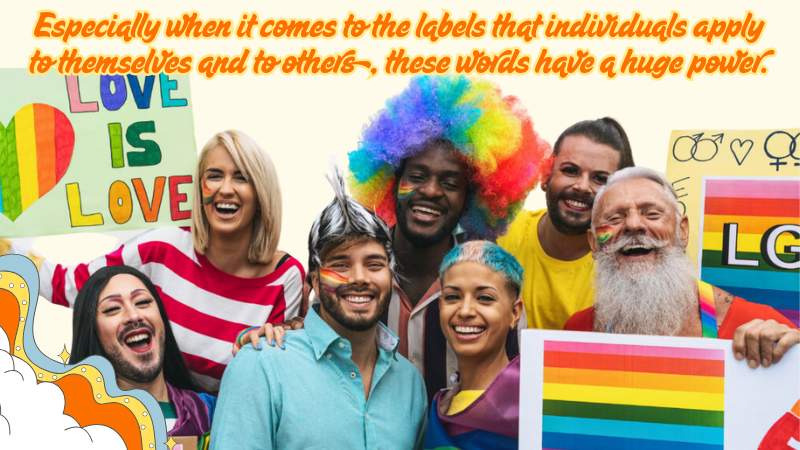
How we use language has always been a sensitive issue; different groups have always claimed ownership of different words or phrases, or claimed an exclusive right to define them. Especially when it comes to the labels that individuals apply to themselves and to others, these words have a huge power. Applying a label to yourself gives wider society a context in which to place you. So, the labels are extremely important.
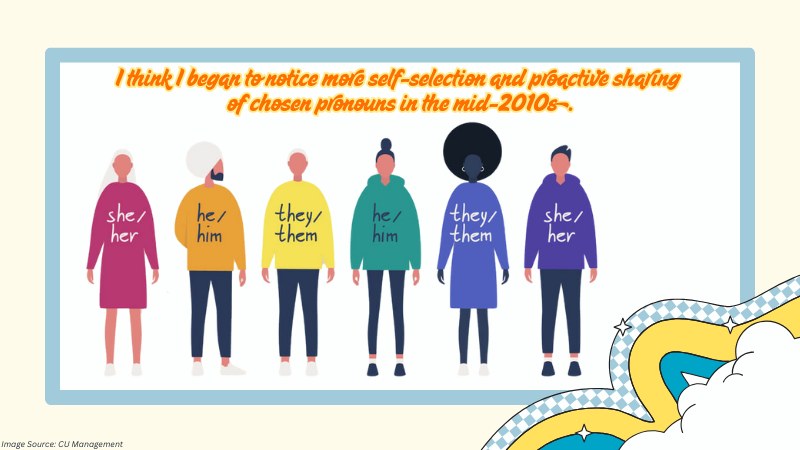
Rarely, however, have these labels had to include the basic pronouns that are among the first words any English speaker learns. Furthermore, there are deficiencies that exist in English that make using the traditional vocabulary awkward for modern use. I think I began to notice more self-selection and proactive sharing of chosen pronouns in the mid-2010s.
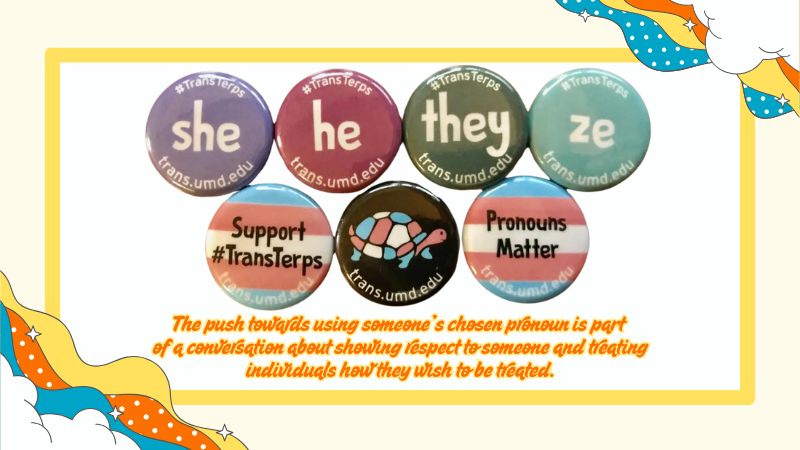
The push towards using someone’s chosen pronoun is part of a conversation about showing respect to someone and treating individuals how they wish to be treated. Proponents of the proactive sharing of pronouns would argue that it’s a sign of respect and acceptance. And for those individuals, hearing and being addressed by the pronoun you feel is most suited to yourself in whatever moment can be highly validating and empowering.
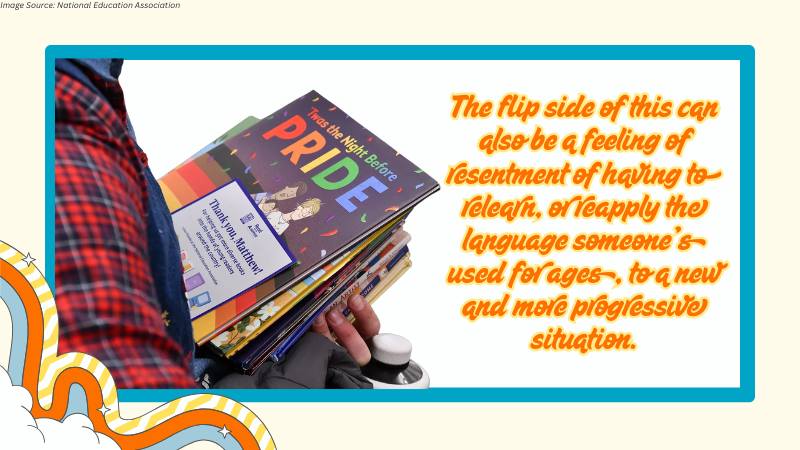
The flip side of this can also be a feeling of resentment of having to relearn, or reapply the language someone’s used for ages, to a new and more progressive situation. Furthermore, there are only a certain number of 3rd person pronouns in English, and huge gaps exist in identity between the very prescribed meanings of English pronouns. For example, nearly all English speakers learn the word they as a word for a group; having to use it instinctively to describe an individual is a big adaptation.
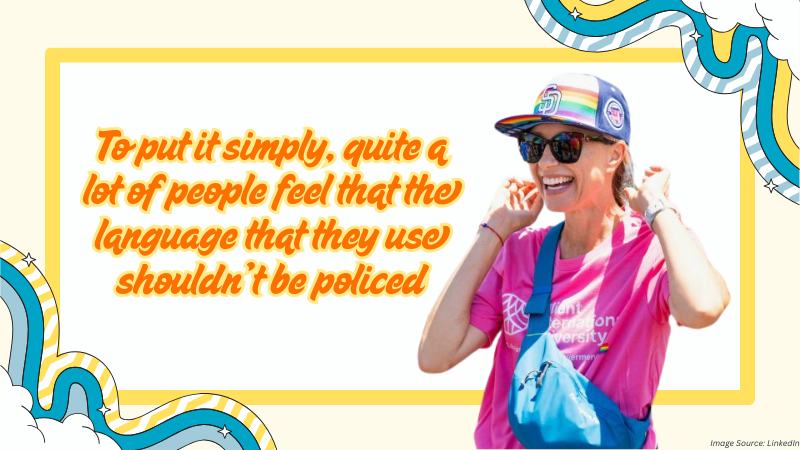
It’s the time and place that we use these pronouns to address one another that seems to be the pain point in this debate. To put it simply, quite a lot of people feel that the language that they use shouldn’t be policed, especially when the pronouns which have become so controversial aren’t those that we use to address each other directly.
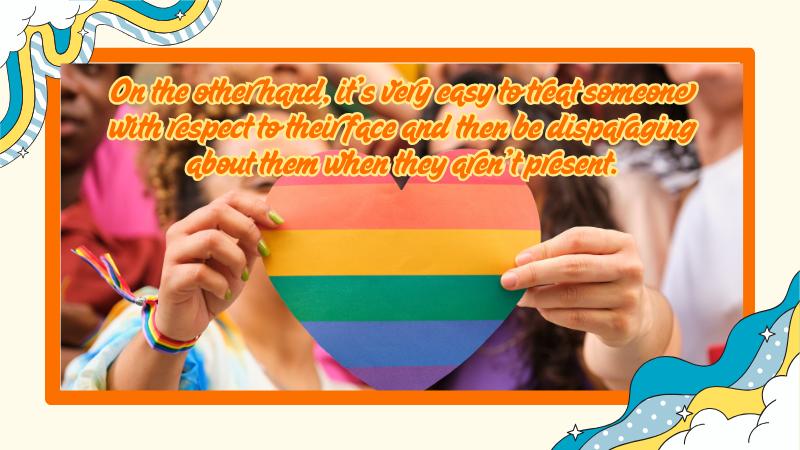
On the other hand, it’s very easy to treat someone with respect to their face and then be disparaging about them when they aren’t present. Essentially, we should strive to be polite and respectful of people’s linguistic boundaries in order not to overwhelm them, while at the same time striving to be respectful of people’s identities.
Bathrooms & Changing Rooms
To be honest, I had never known that this was an issue before it began to appear in more reactionary media. I personally have bigger priorities to take care of in the bathroom than wondering about the equipment of someone who happens to be using the bathroom at the same time.
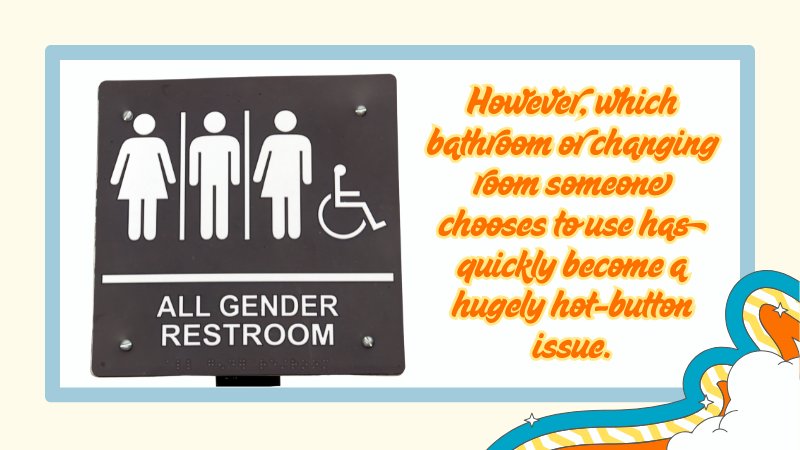
However, which bathroom or changing room someone chooses to use has quickly become a hugely hot-button issue. The question of requiring someone to use the bathroom of their biological sex, or sex assigned at birth, is actually hugely problematic. Also, the reasoning behind requiring this is spurious at best.
So, the argument generally goes that not allowing anyone other than a biological woman into a female-only space ensures a totally safe space, free of threats from masculine aggression. While there is some merit in this principle, it ignores that the problem is not the lack of safe spaces for women, but the aggression they face.
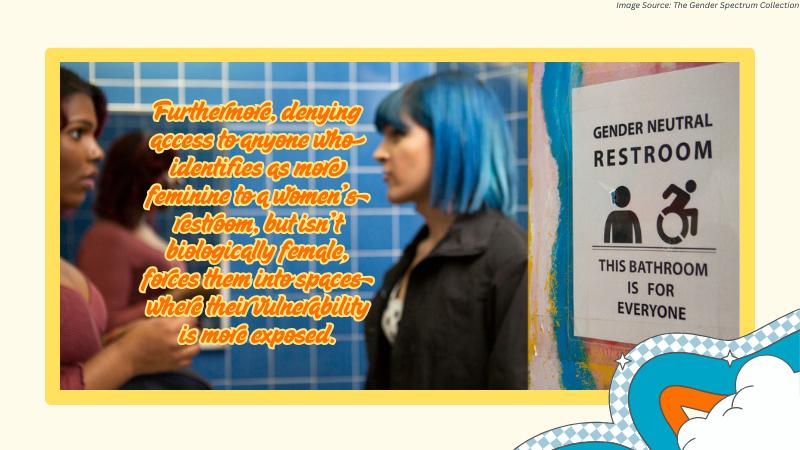
Furthermore, denying access to anyone who identifies as more feminine to a women’s restroom, but isn’t biologically female, forces them into spaces where their vulnerability is more exposed. It gives permission to enforce a certain cookie-cutter, prescriptivist version of masculinity and femininity, and a return to a more active policing of gender expression through bullying and ridicule.
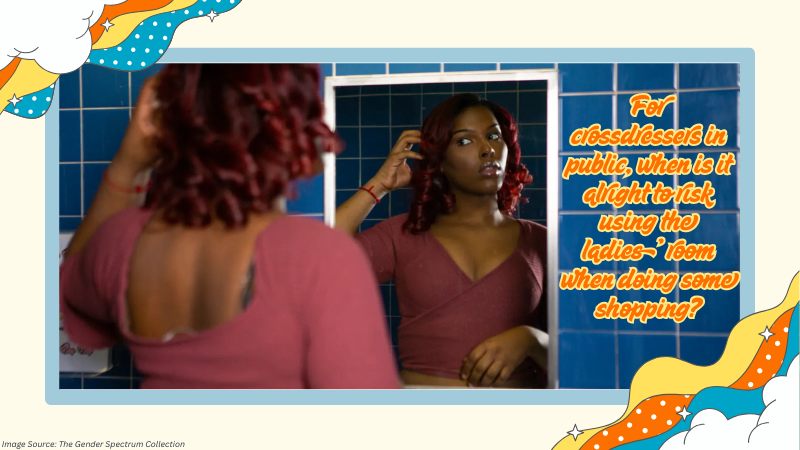
For those of us who like to blur the boundaries, the discussion about who might be allowed into which changing room has a real impact. For crossdressers in public, when is it alright to risk using the ladies’ room when doing some shopping? What might the consequences be if you’re caught?
Increased Social Policing of Gender Norms
For crossdressers, transvestites or non-binary people, the increase in public scrutiny of their identity can be a scary and deeply troubling experience. The increase in the amount of debate about this identity in public media has also given people license to apply their own beliefs about identity in a freer manner. In public spaces, overt social policing is a bit less common, but online bullying and trolling of non-conformity are rife.
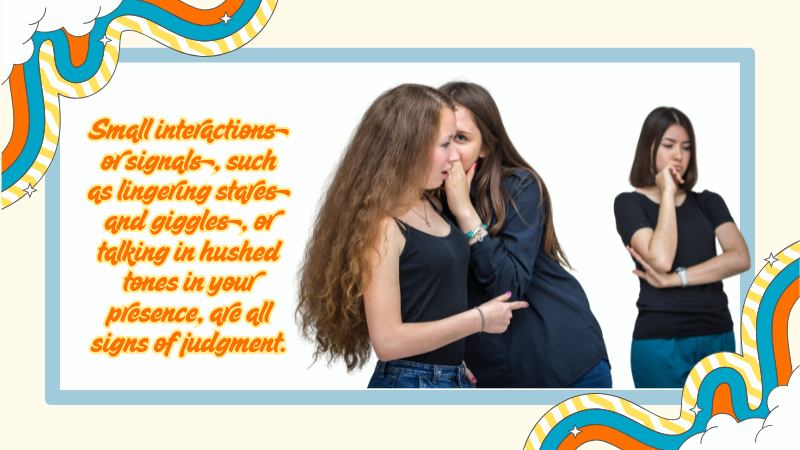
I think we all know how difficult it can be to be confrontational in public. Generally, when communication is face-to-face, it’s very hard to be overtly rude and demonizing. It’s important to realize that the social policing that I’m referring to does not need to be forceful; it can be quite passive-aggressive in public. Small interactions or signals, such as lingering stares and giggles, or talking in hushed tones in your presence, are all signs of judgment. Sometimes it can feel as if existing as a crossdresser or transvestite is a minefield from which there is no escape.
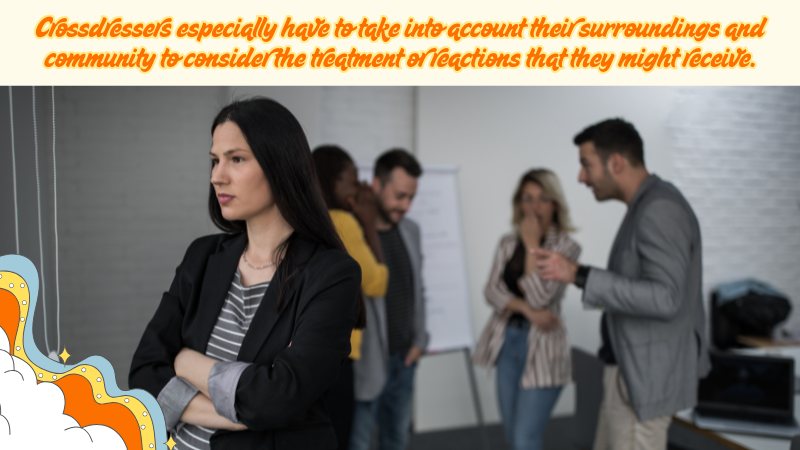
I think it’s more interesting to discuss the motives for this social policing than it is to discuss how it can occur. The need to enforce some unspoken rule and impose authority on someone is always an interesting feeling to explore. I think it often speaks to a deep insecurity or vulnerability about themselves. Some people might be reacting to having their own conceptions of gender challenged; others might be acting out as a vehicle for their own self-denial.
Either way, the consequences of this social policing, either in real life or online, are very real. Crossdressers especially have to take into account their surroundings and community to consider the treatment or reactions that they might receive. An overzealous cultural policeman can inflict a lot of hardship; anxiety attacks, being doxed, revealed, or exposed unwillingly are all possibilities that we should be aware of.
Politics and Wokeness
I’d like to end with a short reflection on the attacks on wokeness that are commonplace in the USA and Europe. Quite a lot of what I’ve been thinking about as I’ve been writing is how the progress of the last few years has been derailed by the political events of the last few years.
A rise in populism and reactionary politics has come with a rise in antiwokeness in the name of defending traditional society or values. The people who make this argument will contend that most choices or differences are binary, not multifaceted. The attraction of making a complicated world much simpler has a lot of appeal, especially when it can be a struggle to understand something new.
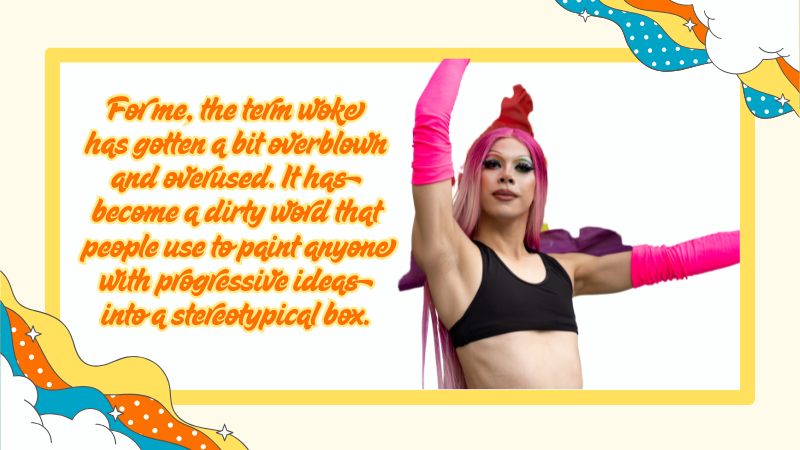
For me, the term woke has gotten a bit overblown and overused. It has become a dirty word that people use to paint anyone with progressive ideas into a stereotypical box. It’s very easy to understand how it can feel like an attack to be told to change the manner in which pronouns are used, and to open your mind to variances in identity that you didn’t know existed before. Moreover, to feel as if you’re being scolded isn’t nice and can cause feelings of resentment.
Personally, I’d like to retire the term woke and return to what could be considered the golden rule: treat people how you wish to be treated.
Conclusion
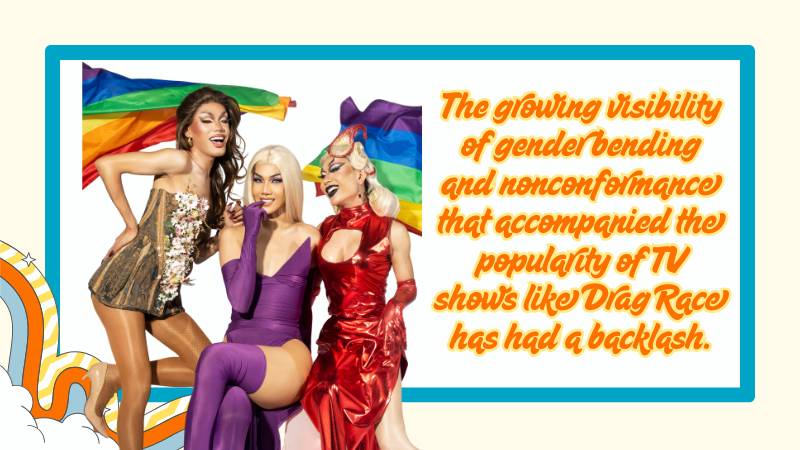
It’s been a difficult 2025 for the gender divergent community. It feels as if a lot of us are being judged and scrutinized to an extent that wasn’t happening before. The growing visibility of gender bending and nonconformance that accompanied the popularity of TV shows like Drag Race has had a backlash. Depending on where you live and how you choose to express yourself, 2025 may have brought a new wave of pressures and challenges. I think we need to be mindful of individuals who don’t share an identity or are struggling with change in society.
Be yourself, be confident, be the best you can be.













 Breast Forms
  Body Suit
  Realistic Mask
  Femini Girdle
 Hip & Butt Enhancement (8)
 Penis Prosthesis
 Fake Muscle
 Bikini
  Wig
Wig  Corsets
 Course
 service@roanyer.com
 +8618652200711
 Facebook
 YouTube
 Twitter
 Instagram
- Crossdressing and Pride: Why It Still Matters After June
- A Pride Letter From the Past
- Pride Month: Self-Acceptance & Finding Your Pride
- Pride Month: A Personal Reflection from the Quiet Side
- Pride Parade 101: What to Wear and How to Shine in Your Pride Outfit
- How to Celebrate Pride Month: Honoring LGBTQ+ History, Progress, and the Future
Established in 2009, We are a recognized manufacturer and seller of professional crossdressing products.
It is our aim to become not just the most creative manufacturer but also a very considerate seller, as we provide the best quality products for crossdressers all around the world.